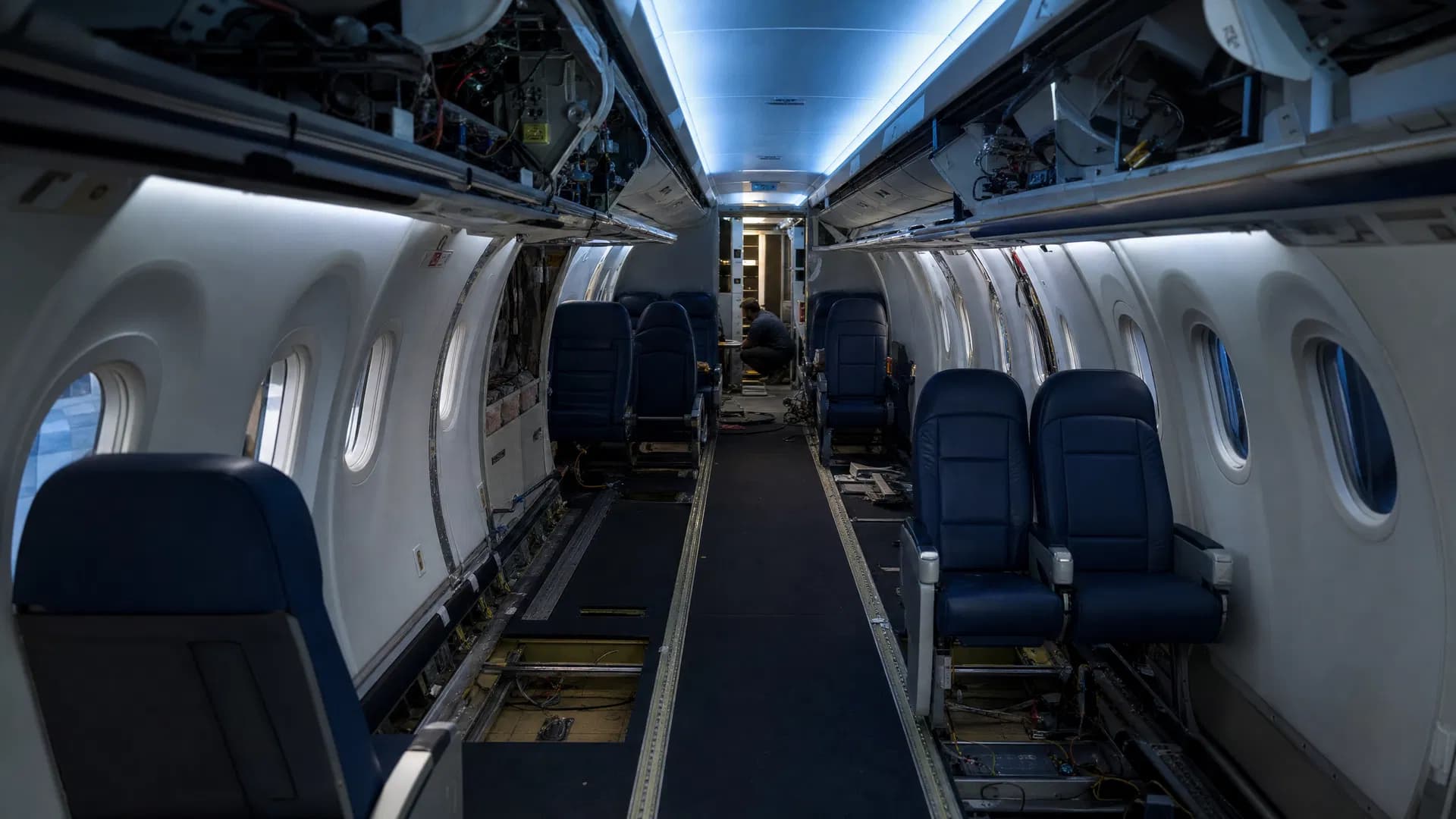
Choosing an aircraft interior modification company is harder than it should be. Operators with aging fleets need cabin work that stays on schedule and meets certification requirements. However, the supplier market often presents a trade-off.
Large Tier-1 suppliers bring substantial scale and certification resources. Their operating models often focus on high-volume line-fit programs. Specialized smaller suppliers may respond quickly, but their engineering, testing, manufacturing, and certification scope can vary.
For technical operations leaders, that gap creates a real procurement challenge. This article provides a practical framework for evaluating suppliers that support in-service aircraft programs.
Why the Aircraft Cabin Supplier Market Creates a Gap
The North American cabin interiors market faces growing pressure. Airlines continue operating older aircraft because new deliveries cannot always meet fleet demand. As a result, more operators rely on cabin refurbishment to protect passenger experience and brand consistency.
Tier-1 suppliers and line-fit priorities
Large Tier-1 suppliers usually focus on original equipment line-fit programs. These programs reward scale, standardization, and long production runs. They also require deep engineering and certification resources.
However, this model does not always align with smaller aftermarket programs. In-service work often involves individual aircraft, compressed maintenance windows, and unique technical conditions. Aftermarket requests may also compete with larger production priorities.
Specialized suppliers and variable capability scope
Specialized smaller suppliers can offer flexibility and responsive service. This approach often appeals to operators working under schedule pressure.
However, capability levels vary. Building a component represents only one part of a cabin modification. The program must also address engineering, testing, documentation, conformity, and regulatory approval. Some suppliers manage most of this scope directly. Others depend on several external organizations. Operators must understand those differences before awarding a program.
Where the “Super Sub-Tier” Aircraft Interior Modification Company Fits
An aircraft interior modification company can occupy a practical position between these two supplier profiles. A “Super Sub-Tier” partner combines the engineering rigor of a certified supplier with the agility of a specialized organization.
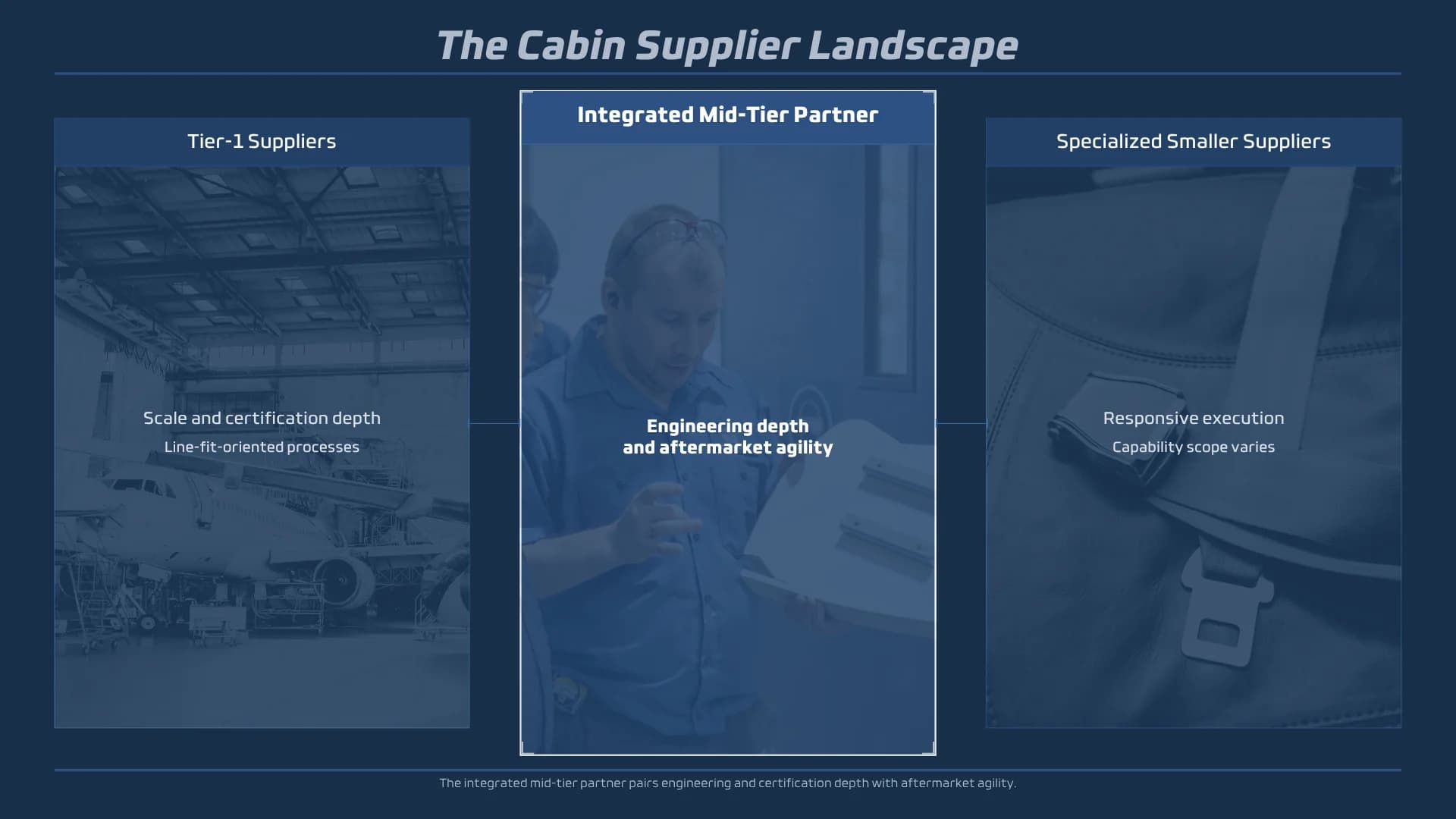
This type of partner structures its organization around specialized aftermarket programs. It also maintains the engineering and certification capabilities that complex cabin work requires.
Responsiveness and certification support often sit in different organizations. An integrated structure brings those functions into one accountable program. This approach reduces handoffs and improves technical coordination.
How to Evaluate an Aircraft Interior Modification Company
Certification depth should be one of the first evaluation criteria. Suppliers can easily overstate this capability, so buyers should request formal and verifiable evidence.
Verify the aerospace quality system
A credible partner should maintain a recognized aerospace quality system. GAL Aerospace operates an AS9100 Rev D quality management system. The aviation, space, and defense sectors use this standard to control quality and risk.
The quality system governs design control, supplier management, configuration control, inspection, and documentation. These processes help ensure that every eligible product meets the applicable requirements before release.
Confirm manufacturing and maintenance approvals
GAL holds Transport Canada CAR 561 Approved Organization status for the manufacture of aeronautical products. Its quality system includes receiving, in-process, and final inspection controls.
GAL also holds CAR 573 Approved Maintenance Organization status. Transport Canada treats this maintenance approval as a separate authorization from the CAR 561 manufacturing approval.
Review certified modification experience
GAL Aerospace currently holds 14 active supplemental type certificates across commercial aircraft platforms. Each STC represents a modification that passed engineering, testing, documentation, and regulatory review.
The applicable regulatory authority approved each modification for service. This portfolio demonstrates experience across the full certification pathway, not only component production.
Certification depth: three signals to verify
- Aerospace quality system. Look for a recognized quality management system that controls design, documentation, and inspection.
- Approved organization status. Confirm the supplier's manufacturing approval and identify any separate maintenance authorization.
- Certified modification portfolio. Review programs that reached regulatory approval, not only parts that entered production.
Buyers should also ask how the supplier manages certification work. External dependencies can create schedule risk when a design requires adjustment.
An integrated aircraft interior modification company can coordinate engineering, documentation, testing, and regulatory support with fewer organizational handoffs.
Agility and Accountability Throughout the Program
Certification depth shows whether a supplier can support the technical scope. Agility shows whether it can respond to the operator's schedule. Accountability connects both capabilities when challenges appear.
Aftermarket programs rarely follow a perfect plan. Aircraft may arrive with undocumented modifications. Components may show unexpected wear. Maintenance windows may also change with little notice.
A dependable partner responds quickly in these situations. Direct access to engineering and leadership can speed up technical decisions. It can also prevent routine questions from moving through several management layers.
For technical operations teams, this responsiveness can reduce avoidable delays. It can also support better alignment with the planned maintenance window.
The right partner remains accountable through engineering, manufacturing, certification support, installation, and entry-into-service activities.
Why an Integrated Aircraft Interior Modification Company Supports Faster Execution
Speed does not require shortcuts. It comes from a well-coordinated structure. Separate organizations create a new handoff at every program stage. Each handoff can add communication risk and decision time.
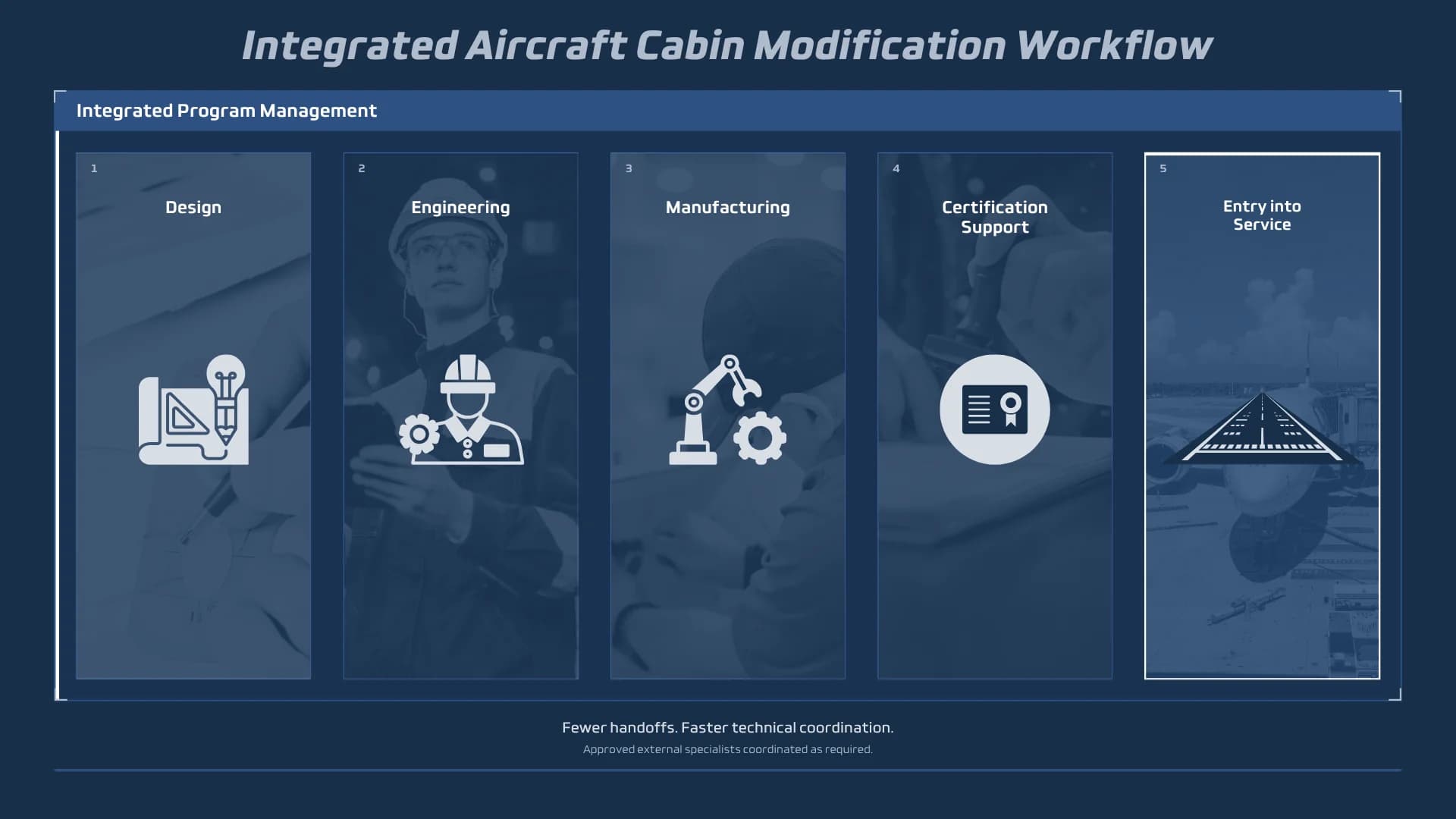
An integrated mid-tier partner connects design, engineering, manufacturing, and certification support within one coordinated program. When engineering identifies a problem, the responsible teams can evaluate it together.
This structure can support faster aftermarket decisions. It can also reduce exposure to unnecessary delays during an aircraft maintenance event.
Platform familiarity adds another advantage. A supplier that has completed a certified solution on an aircraft family already understands many platform-specific requirements.
That experience can support future programs on similar aircraft. Fleet engineering teams gain a more predictable starting point when planning work across multiple tail numbers.
Questions to Ask an Aircraft Interior Modification Company
A short set of direct questions can reveal more than a general capabilities brochure. Technical operations and procurement teams should ask:
- Do you provide direct engineering and certification-program capability?
- Which engineering, testing, or certification activities require external partners?
- What experience do you have on our aircraft platform and cabin configuration?
- Which parts of the proposed work will your organization complete internally?
- Which manufacturing and maintenance approvals apply to the program scope?
- Who owns technical decisions when integration issues appear?
- How do you manage configuration control, conformity, inspection, and documentation?
- What installation and entry-into-service support do you provide?
The answers show whether the supplier can support the full program pathway. They also reveal which activities depend on organizations outside the operator's direct view.
What This Means for Your Next Cabin Program
Evaluating an aircraft interior modification company requires more than reviewing production capability. Operators must also assess engineering depth, certification support, responsiveness, and accountability.
The market often separates these capabilities. Large suppliers offer scale and extensive resources. Smaller suppliers may provide responsive execution. An integrated mid-tier partner brings these strengths into one coordinated program.
This model can help operators manage complex cabin work with fewer handoffs. It also supports clearer accountability from early engineering through entry into service.
GAL Aerospace combines engineering, manufacturing, certification support, and installation capabilities for in-service aircraft programs. The company also coordinates approved external specialists when the technical scope requires them.
Start the Conversation
Planning a Cabin Modification Program?
Speak with our engineering and certification team about your aircraft, schedule, and technical requirements.