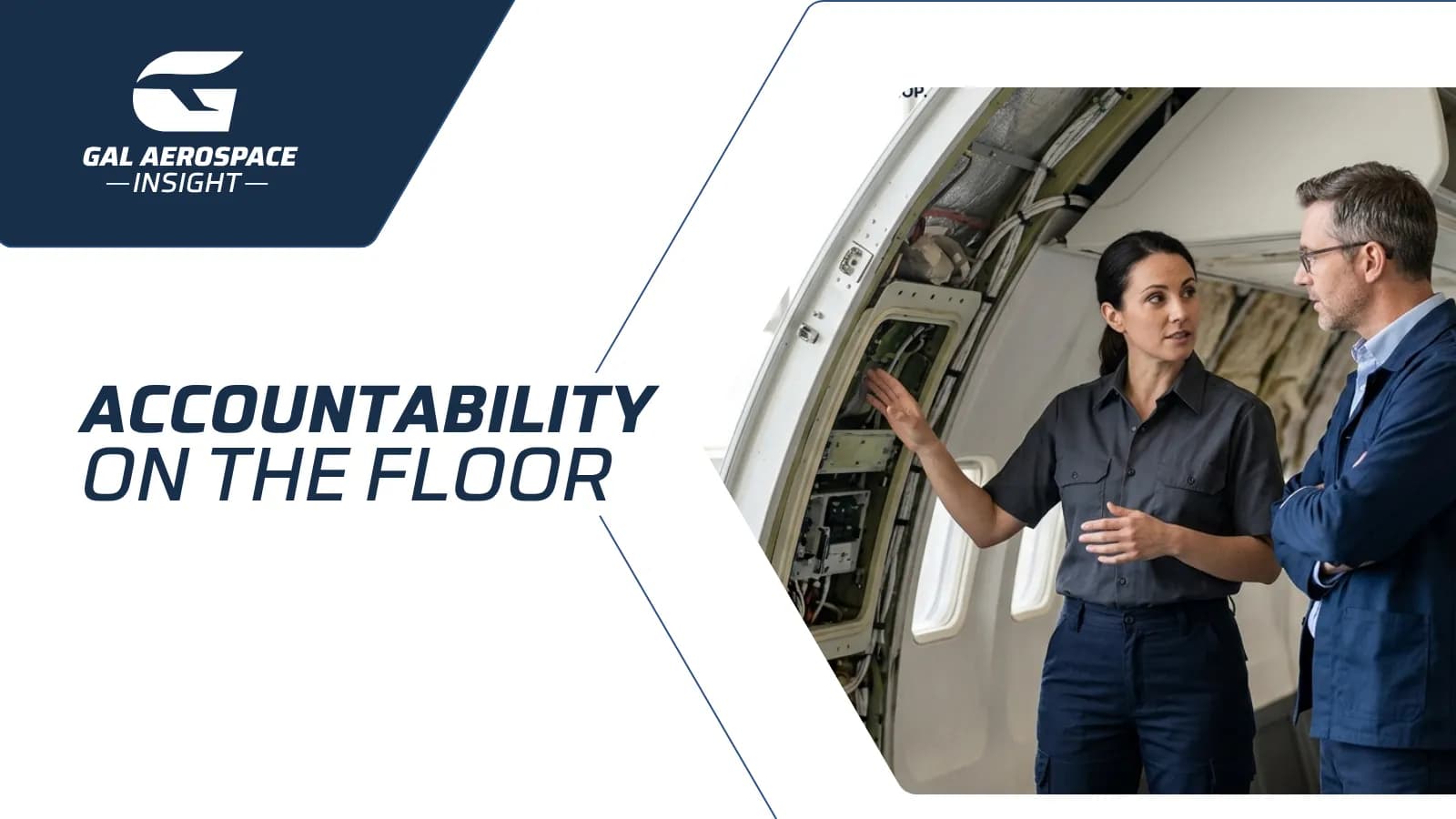
A complex aircraft cabin refurbishment rarely fails on paper. It fails in the gap between the signed scope and the moment something unexpected appears on the aircraft. That gap is where the program gets tested.
For a procurement lead at an MRO, the contract sets the terms. Still, it cannot answer the question that matters most under pressure. When the work gets hard, who actually shows up.
The hidden risk in complex cabin modification programs
Every complex cabin program carries surprises that no statement of work predicts. A structural condition differs from the drawing. A part arrives late. An interface that looked clean on paper needs rework on the aircraft.
In-service aircraft also hold years of accumulated change. Records do not always match the airframe. So even a well-scoped program meets conditions the survey could not capture.
In practice, these moments are normal, not rare. So the real variable is not whether problems appear. It is how fast the supplier moves when they do.
An aircraft cabin refurbishment lives or dies on that response time. Every idle day on the aircraft can create cost and planning pressure the operator did not intend to absorb. For this reason, speed of response belongs in the supplier decision, not only price.
Where an aircraft cabin refurbishment program actually goes wrong
The damage rarely comes from the original technical challenge. Instead, it comes from delay in addressing it. When a problem surfaces, the clock starts.
While engineering waits for a decision, the bay sits idle. While approvals route through layers, the integration question stays open. As a result, a manageable issue grows into a schedule problem.
A schedule problem then grows into a trust problem. For procurement, that is the real exposure in a supplier relationship. The risk is not the quote. It is the behavior on a hard day.
Why layered supplier structures can slow recovery
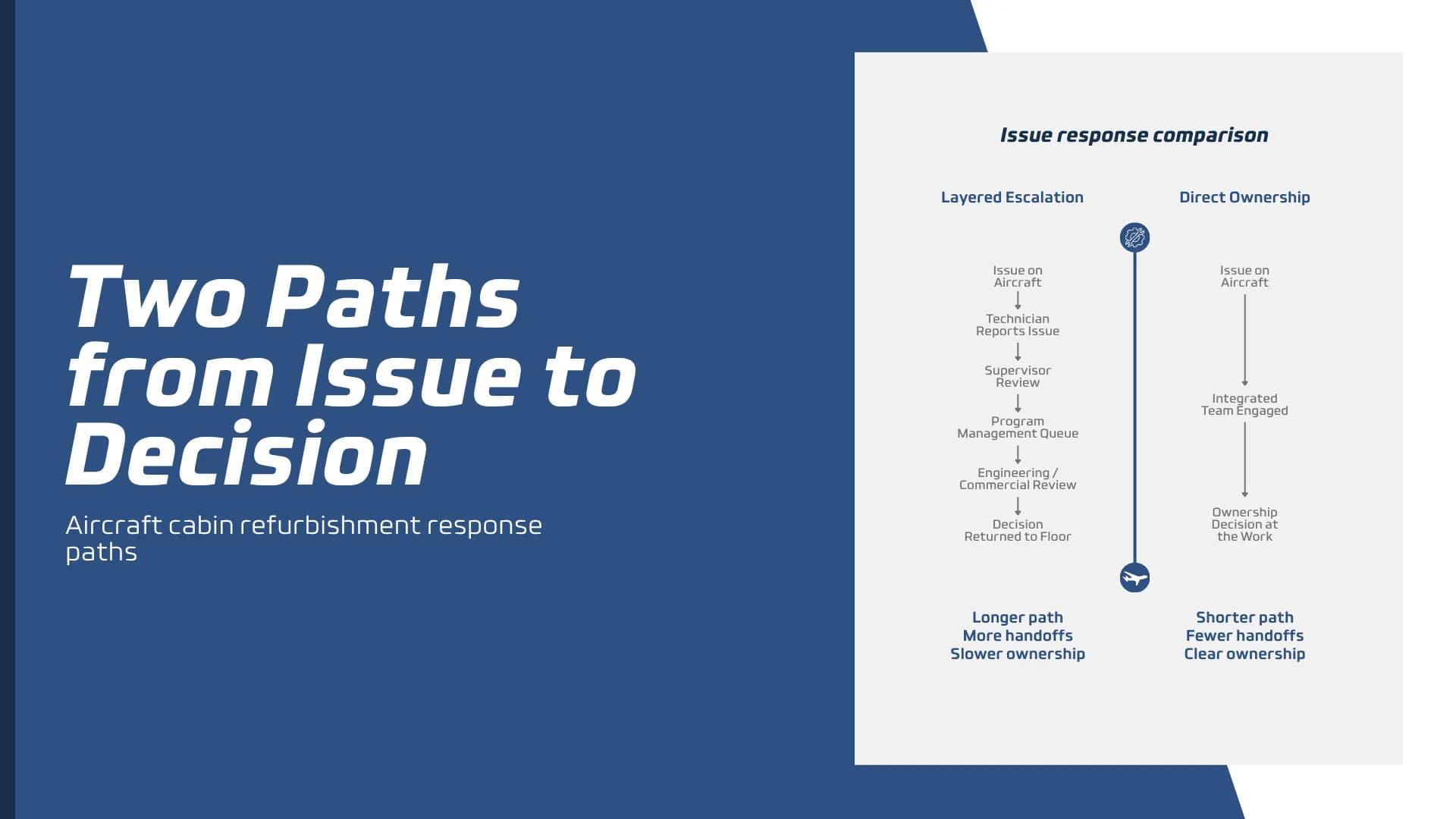
Catalog-driven organizations are often structured for volume, with recovery handled through several decision layers. When a program hits a snag, the people who can solve it sit several layers from the floor. The technician sees the issue first. Yet the decision lives elsewhere.
So the problem waits in a queue. It gets escalated, reviewed, and assigned while the aircraft stands still. Of course, process has real value, and disciplined process protects airworthiness.
Distance is the deeper problem. The further a decision sits from the floor, the longer recovery takes. In many programs, the delay can become more disruptive than the original technical issue.
Even so, process without ownership becomes a place where urgent problems slow down. That is the gap a procurement lead feels most on a difficult program. By comparison, an owner-led response closes that gap early.
What executive accountability looks like in an aircraft cabin refurbishment
Accountability is a behavior, not a slogan. At GAL Aerospace, the leadership culture is deliberately hands-on. The aim is to bring leadership, engineering, production, and program support into the same conversation quickly.
When a program becomes difficult, the blocking question becomes visible to that group. The team can then align the next technical, manufacturing, and communication steps around the issue. Rather than route the problem upward, the people who can act stay close to it.
The internal standard is a proactive "we are on it" response. That standard describes how the team engages, not a guaranteed outcome. It puts decision-makers in contact with the people doing the work.
Because the divisions sit under one operational structure, the path from problem to decision stays short. So the program tends to recover faster. In practice, trust grows from these moments, not from the proposal.
Integration under one roof: engineering, manufacturing, and certification support
Response speed depends on structure. GAL Aerospace operates as a vertically integrated cabin interiors and modification partner. The company brings more than two decades of experience serving airlines, OEMs, MRO operators, and lessors.
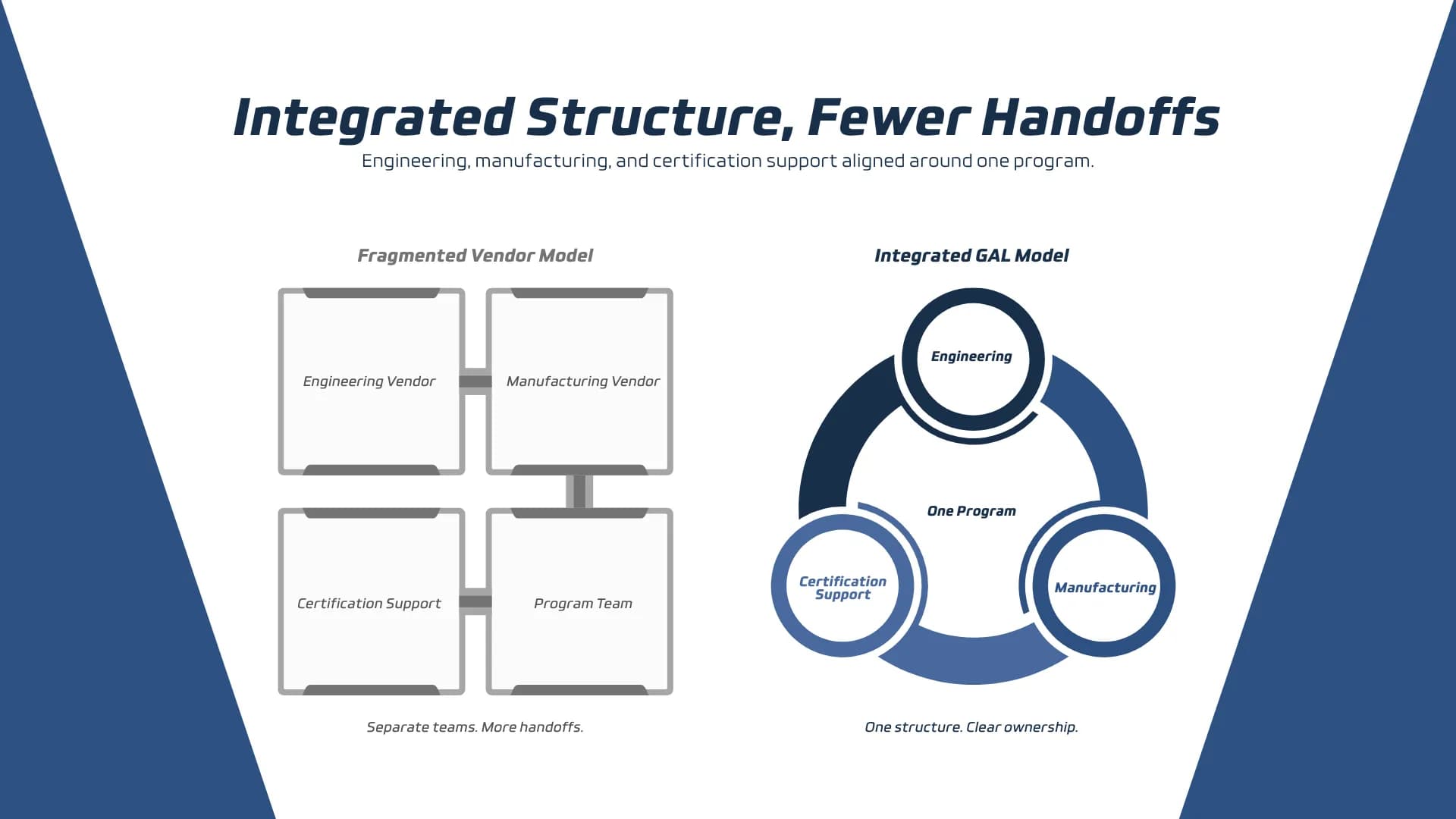
It designs, engineers, manufactures, supports certification, and installs cabin solutions through three divisions. GAL Aviation leads engineering and certification support. AeroQuest manufactures interior components, including lavatories, showers, countertops, and composite monuments. GAL AeroStaff adds technical staffing support when a program requires specialized hands. Since these capabilities sit together, a refurbishment program has fewer handoffs to fail. It also has fewer seams where accountability gets lost.
Each handoff between separate vendors adds a place to wait. It also adds a place to assign blame. One structure reduces both.
The capacity behind the response
Response speed also depends on capacity. A supplier that is fully booked cannot move fast when an issue surfaces. Availability is not a feature. It is a requirement for accountability.
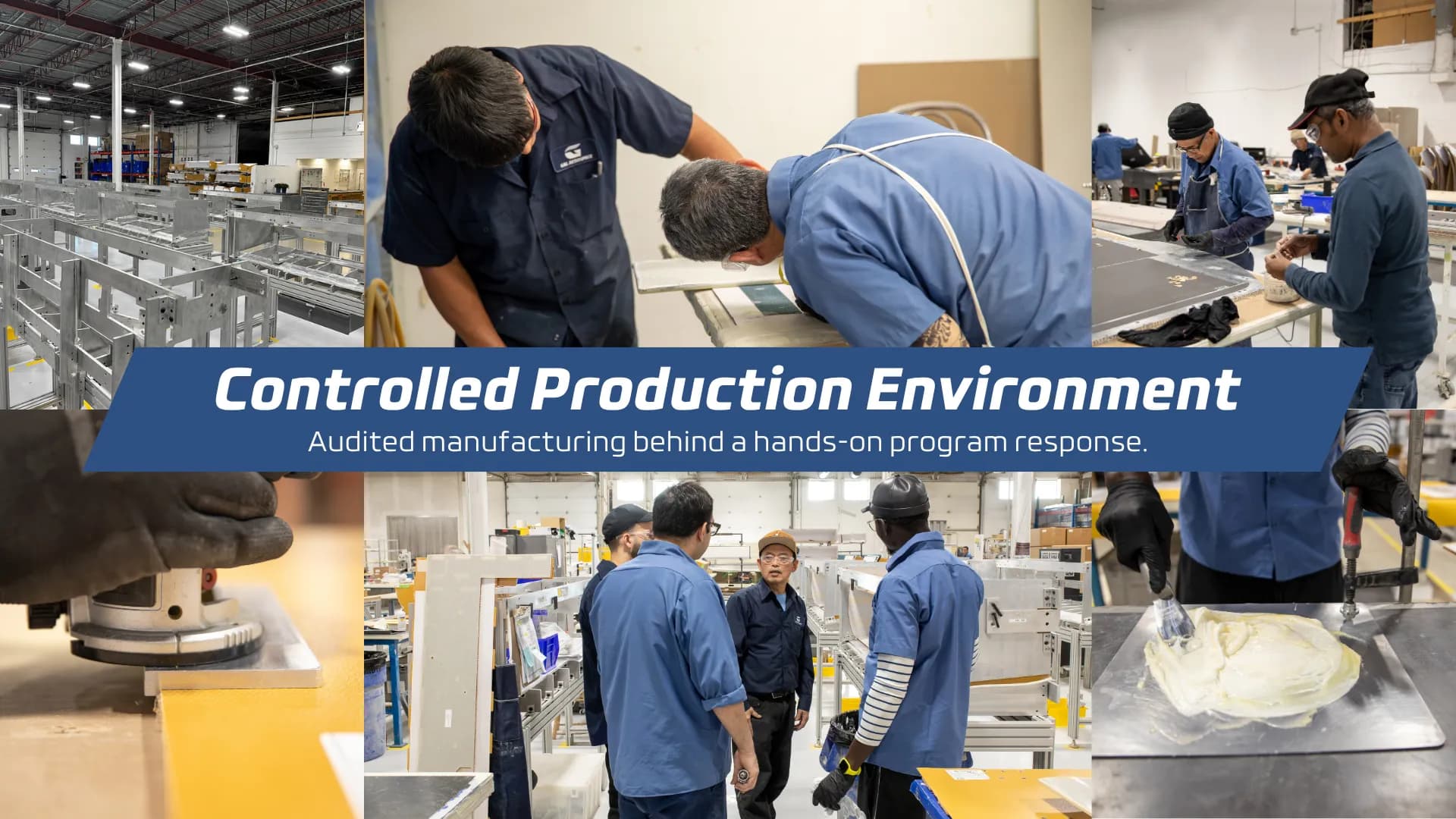
GAL Aerospace operates a controlled manufacturing environment under AS9100 Rev D and ISO 9001 certification. The facility is audited. The processes are documented. The team is trained. This infrastructure supports the hands-on engagement model. When a program needs a rapid response, the manufacturing team can move because the foundation is already in place.
How GAL Aerospace approaches aircraft cabin refurbishment
The company starts with a specific operator problem. It does not start with a catalog. That difference shapes everything downstream. The engineering team works backward from the operator's constraint—whether that is a certification requirement, a schedule pressure, or a modification goal. The result is a solution that fits the problem, not a product that fits the catalog.
Once the technical path is clear, the company brings manufacturing and certification into the conversation early. That alignment prevents surprises later. When a program hits a snag, the team is already aligned. The decision-makers are already in the room. The response is faster because the structure supports it.
A procurement view of aircraft cabin refurbishment risk
From a procurement perspective, the risk in a cabin refurbishment is not the quote. It is the behavior when the program becomes difficult. A supplier that looks good on paper can disappear when the work gets hard. That is the real exposure.
The supplier to choose is the one that shows up. That means a structure that supports fast decisions. That means leadership that stays engaged. That means a team that treats the program as their own.
Choosing a refurbishment partner you can reach
In practice, the best way to evaluate a supplier is to ask the hard questions. How do you handle issues that were not in the original scope? Who makes the decision? How fast can you move? What does your team look like when the program gets difficult?
The answers matter more than the brochure. A supplier that can answer clearly, with specifics, is more likely to deliver when it counts. That is the difference between accountability on paper and accountability on the floor.
Discuss Your Cabin Refurbishment Program
GAL Aerospace works with airlines, MROs, OEMs, and lessors on cabin refurbishment programs. If you are evaluating options for a modification program, or if you want to discuss how accountability and integration can support your timeline, reach out.